
Diamonds are forever, so what better way to signify your undying love for your future spouse? The problem becomes choosing the stone: with so many options to choose from, information seemingly scarce, and a daunting price tag, everyone wants to nail this part of the process. An engagement ring is a one-time purchase that is typically among the most expensive of one’s lifetime, so the beauty really is in the details. It is our pleasure to provide the following guide:
1. Select a diamond:
Selecting the stone of your dreams seems like the most daunting part of the process. Between the “4 C’s”, laboratory reports and price differences that seemingly don’t make sense, choosing a loose diamond can seem like an impossible decision– that’s why we at Arazi Frye Diamonds use our expertise to walk our clients through the process.
The most important factor to consider is the “4 C’s”: Cut, Color, Clarity and Carat (which is the unit diamond size is measured in).
Cut pertains to diamond shape, the most popular of which being round, though heart, pear, oval, and other common shapes may attract certain people more so than the classic round shape.

Color, ironically enough, is defined as the diamond’s absence of color. Diamond Color is graded on a scale from D-Z, where D is colorless (white) and Z is a nearly yellow color.

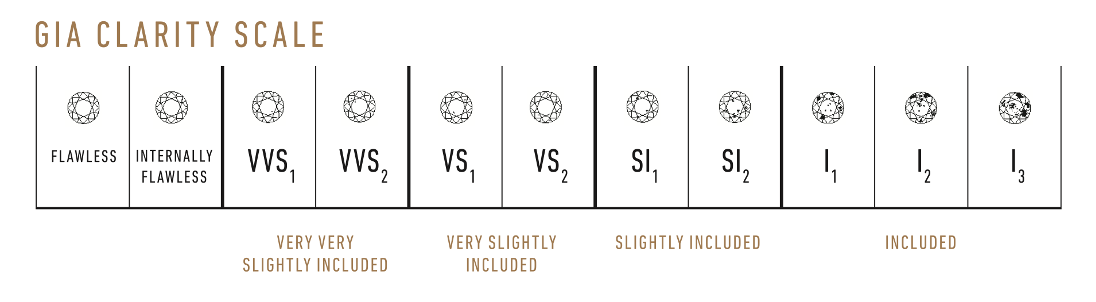
Clarity is graded on a scale from “IF” (internally flawless) to “I” (imperfect). These grades pertain to the amount/size of inclusions inside a diamond. Inclusions are identified and plotted using a 10x magnification jeweler’s loupe, and only stones graded “I1” or below have eye-visible inclusions.
Carat is the unit of diamond weight, where 1 carat equals 0.2 grams. The larger a diamond, the more expensive the price: for example, a 2 carat stone is typically more valuable than two 1 carat stones of the same quality. The same is true for bigger stones as well.

None of the above “C’s” is more important than the other, which makes selecting a stone truly a matter of personal preference. The 4 C’s are best used to determine diamond values and ensure you pay fair market value for a diamond.
2. Ensure the diamond is certified and authentic:
While diamond grades are crucial for the decision-making process, it is equally (if not more so) important to ensure the information you were given about a stone is accurate.
There are several world-renowned gemological laboratories that authenticate and grade diamonds, though none are quite as respected as the Gemological Institute of America (GIA). The certificate should plot out the stone’s 4 C’s, measure its size and proportions, and give any supplementing information about a diamond, such as a laser inscription number (specific to GIA stones graded since 2016).
While a certificate serves as an appraisal of quality, the most important aspect is it proves your stone is genuine and authentic – GIA-certified diamonds are the highest standard. While primarily grading quality, consider the lab report as the diamond’s certificate of authenticity, as without one it is difficult to authenticate or appraise your diamond.
